
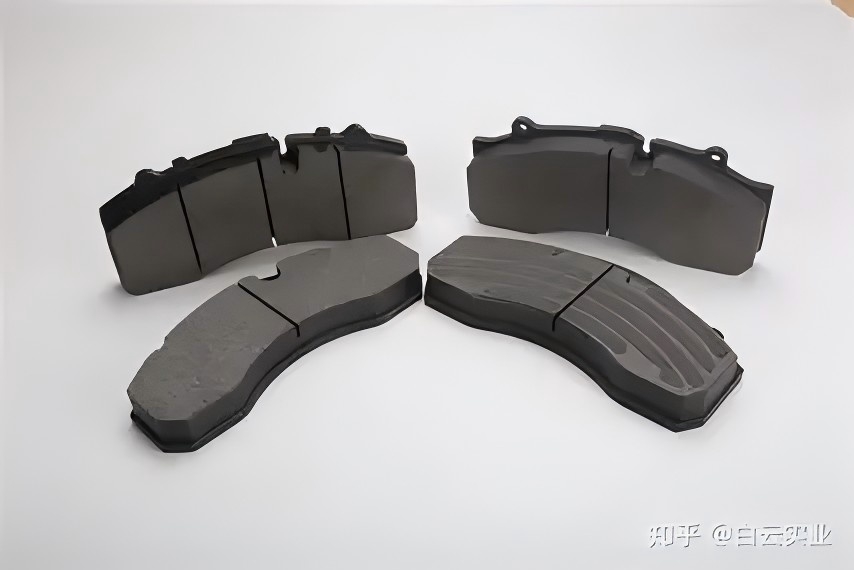
Brake pads are a crucial component of a vehicle’s braking system. They play a vital role in stopping a vehicle by converting kinetic energy into heat through friction with the rotor. The materials used to manufacture brake pads have a significant impact on their performance, durability, and noise levels. In this article, we will explore the various materials used to manufacture brake pads and their properties. Organic Brake Pads Organic brake pads, also known as non-metallic brake pads, are made from a mixture of materials such as rubber, carbon, and Kevlar fibers. Organic brake pads perform well under low-to-medium speed driving conditions and are suitable for everyday driving. They produce less noise than metallic brake pads and are generally cheaper. One of the main advantages of organic brake pads is low dust generation. This is because they do not contain any metal particles that wear down and generate dust. However, this also means that they may wear out faster than metallic brake pads, potentially leading to a shorter lifespan and more frequent replacements. Semi-metallic Brake Pads Semi-metallic brake pads are made from a mixture of metallic particles such as copper, steel, and iron with organic materials. They offer better performance and durability than organic brake pads and are suitable for high-performance driving and heavy-duty vehicles. Semi-metallic brake pads can withstand higher temperatures and have better wear resistance than organic brake pads. However, they also produce more noise and dust, which may be a concern for some drivers. Additionally, semi-metallic brake pads can be more expensive than organic brake pads. Ceramic brake pads are made of ceramic fibers, non-ferrous metal fillers, and binders. They offer the best performance, durability, and noise reduction of all types of brake pads. Ceramic brake pads also produce the least dust, making them a popular choice for luxury and high-performance vehicles. Ceramic brake pads have higher heat resistance than organic and semi-metallic brake pads, making them suitable for high-speed driving and heavy-duty applications. They also have a longer lifespan and require less frequent replacements, which reduces maintenance costs over time. However, ceramic brake pads are generally the most expensive option of all types of brake pads. They may also require a longer sleeper life, which can affect their performance during the first few hundred miles of use. Choosing the Right Brake Pads When choosing brake pads for your vehicle, it is important to consider factors such as driving style, vehicle weight, and environmental conditions. Organic brake pads are suitable for everyday driving and light vehicles, while semi-metallic and ceramic brake pads are better suited for heavy-duty applications and high-performance driving. Noise levels and dust generation are also important considerations. If noise and dust are a concern, ceramic brake pads are the best choice. However, they may not be suitable for all driving conditions, and their higher cost may be a factor for some drivers. In conclusion, brake pads are a crucial component of a vehicle’s braking system, and the materials used to manufacture them significantly impact their performance, durability, and noise levels. Organic brake pads, semi-metallic brake pads, and ceramic brake pads are three main types, each with its unique characteristics and advantages. Choosing the right brake pads for your vehicle requires careful consideration of factors such as driving style, vehicle weight, and environmental conditions. By selecting the appropriate brake pads, you can ensure optimal braking performance and safety for your vehicle.
Facebook
Twitter
LinkedIn
Pinterest
Skype
Telegram
WhatsApp