
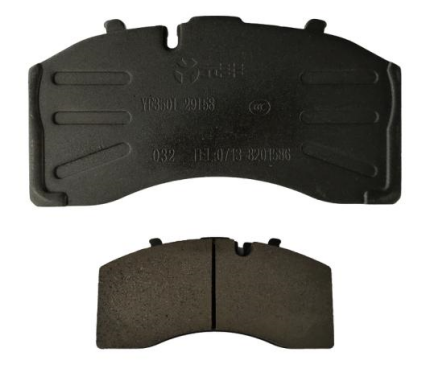
Brake pads, as a core component of a car’s braking system, are the last line of defense for ensuring driving safety. The coefficient of friction determines braking performance, while lifespan relates to operating costs and maintenance frequency. These two seemingly present a natural trade-off—a high coefficient of friction means stronger braking force, but often comes with faster wear; a long lifespan depends on more wear-resistant materials, which may sacrifice some braking sensitivity. Finding a balance between these two factors, achieving the dual goals of “sufficient safety and durability at an economical price,” is not only a core issue in brake pad research and development but also a key consideration for car owners when purchasing and using them.
To understand the balance between these two factors, it’s essential to first clarify the core definitions and intrinsic relationship between the coefficient of friction and service life. The coefficient of friction of brake pads is a key parameter measuring the frictional efficiency between them and the brake disc. Specifically, it refers to the ratio of the frictional force generated during braking to the vertical pressure applied to the brake pads, directly determining the strength of braking force and response speed. A higher coefficient results in faster deceleration and a shorter braking distance, making it particularly suitable for aggressive driving and downhill driving in mountainous areas requiring strong braking. A lower coefficient results in relatively weaker braking force, requiring greater pedal force to achieve the desired braking effect, but the wear rate is usually slower. The service life of brake pads is essentially the process of the friction material gradually wearing down during long-term braking friction until it reaches the replacement standard. It is primarily based on mileage, but is also affected by multiple factors such as material, usage habits, and road conditions. The typical replacement cycle is between 40,000 and 80,000 kilometers, with significant differences depending on the specific circumstances.
The root of the contradiction lies in the characteristics of friction materials and the energy conversion law of the braking process. The essence of braking is to convert the kinetic energy of a vehicle into heat energy through friction. The higher the coefficient of friction, the more heat energy is converted per unit time, the greater the wear pressure on the friction material, and the shorter its service life. Conversely, if one blindly pursues a long service life and chooses materials with high hardness and strong wear resistance, the surface micro-protrusions will be fewer, the actual contact area will be reduced, and the coefficient of friction will decrease accordingly. This may lead to sluggish braking response, longer braking distance, and potential safety hazards. This dilemma of “not being able to have your cake and eat it too” is not insurmountable—the core of the balance point is “adaptation,” that is, finding the optimal matching range between the coefficient of friction and service life based on vehicle type, usage scenario, and driving habits, rather than pursuing the extreme of a single parameter.
The key factors influencing the balance between these two factors can be categorized into three main dimensions, which are also the core basis for finding the equilibrium point. Firstly, material characteristics are fundamental. Brake pad friction materials are mainly divided into four categories: semi-metallic, low-metallic, ceramic, and organic. Different materials exhibit significant differences in friction coefficient and wear resistance. Ceramic brake pads contain a high proportion of ceramic fibers and metal particles, with a friction coefficient stable between 0.37 and 0.42. They are heat-resistant, wear slowly, and have a service life of 60,000 to 80,000 kilometers, balancing braking performance and durability, making them the mainstream choice for current passenger cars. Semi-metallic brake pads have a high metal content and a relatively high friction coefficient (above 0.4), good heat dissipation, but are prone to wear and generate more noise. Their service life is mostly between 40,000 and 50,000 kilometers, suitable for vehicles with certain braking performance requirements. Organic brake pads have a low friction coefficient (below 0.3), wear the slowest, but have weak braking force, making them only suitable for low-speed, lightly loaded vehicles. Furthermore, components such as binders, reinforcing agents, and friction modifiers in the friction material also indirectly alter the balance between the friction coefficient and service life by affecting thermal fade characteristics.
Secondly, usage scenarios and driving habits are key variables. In congested urban traffic, frequent starts and stops and high braking frequency can shorten the lifespan of even highly wear-resistant brake pads by up to 30%. In such cases, while using high-friction coefficient products can ensure sensitive braking, the wear rate will be further accelerated, increasing maintenance costs. On highways or suburban roads, braking frequency is low, and vehicles mainly travel at a constant speed. In these situations, products with a moderate friction coefficient and better wear resistance can be selected to achieve a balance between extended lifespan and safety. Driving habits also have a significant impact: frequent hard braking, prolonged braking, or overloading will accelerate brake pad wear and disrupt the balance between friction coefficient and lifespan. On the other hand, anticipating road conditions, coasting with the accelerator released, and applying the brakes lightly can reduce friction loss and maintain a stable equilibrium between the two.
Thirdly, the influence of temperature and braking conditions cannot be ignored. The coefficient of friction is not a fixed value and fluctuates with temperature. When the temperature exceeds 200℃, the coefficient of friction begins to decrease, and it drops sharply when it reaches the decomposition temperature of the resin or rubber, resulting in “thermal fade.” This affects braking performance and accelerates the wear of friction materials. As the temperature decreases, the coefficient of friction may return to normal levels, or even experience “over-recovery.” In addition, braking pressure and initial braking velocity also affect the balance between the two by changing the amount of frictional heat generated—excessive braking pressure and excessively high initial velocity will lead to a surge in frictional heat, causing fluctuations in the coefficient of friction, accelerated wear, and disrupting the original equilibrium state.
So, how do we find and achieve a balance between the coefficient of friction and service life? For brake pad R&D and production, the core is to alleviate the contradiction between the two through material formulation optimization and structural design. For example, adding high-temperature friction modifiers to friction materials can alleviate thermal fade, keeping the coefficient of friction stable at different temperatures while reducing wear. Optimizing the brake pad groove structure improves chip removal and heat dissipation performance, reducing the temperature of the friction surface, thus maintaining a stable coefficient of friction and extending service life. Studies have shown that structurally optimized synthetic brake pads can increase airflow by 28.22% and reduce the instability coefficient by 49.53%, significantly improving wear resistance while ensuring a stable coefficient of friction. At the same time, manufacturers need to customize suitable coefficient of friction ranges based on the weight and braking system design of different vehicle models. For example, heavy-duty European and American vehicles typically use a coefficient of friction of 0.25-0.35 to ensure braking stability and prevent wheel lock-up due to excessive braking force, while also considering service life.
For car owners, the key to finding the balance is “choosing according to needs and using scientifically.” First, clarify your usage scenario: for daily urban commuting and smooth driving, prioritize products with a friction coefficient between 0.3 and 0.4. These brake pads balance braking performance and durability, making them the optimal choice for family cars. For frequent driving in mountainous areas, steep slopes, or aggressive driving habits, products with a friction coefficient above 0.4 can be used, sacrificing some lifespan for stronger braking safety. However, more frequent inspections are needed, and severely worn brake pads should be replaced promptly. If primarily used for low-speed commuting and light-load transportation, products with a friction coefficient below 0.3 can be chosen for a longer lifespan. Second, follow national standards when purchasing. my country’s GB5763-2018 standard stipulates that the friction coefficient grades for commonly used brake pads for passenger cars are Grade 1 (0.35-0.45) and Grade 2 (0.45-0.55). Prioritize products that meet these standards to avoid affecting balance and safety due to incompatible parameters.
Scientific use and regular maintenance are crucial for maintaining a balance between brake pads and engine braking. In daily driving, avoid frequent hard braking and prolonged braking. Anticipate road conditions and utilize engine braking to assist deceleration, reducing brake pad wear. Regularly check brake pad thickness; new brake pads are approximately 10-14mm thick. Replace them immediately when they wear down to 3mm. Simultaneously check the brake discs; if wear exceeds 2mm, replace them as well. Uneven brake disc wear can lead to abnormal brake pad stress, disrupting the balance between friction coefficient and lifespan. Furthermore, keeping brake pads clean and preventing oil and dust buildup can prevent fluctuations in the friction coefficient, reduce abnormal wear, and extend their lifespan.
It’s important to note that balancing the coefficient of friction and service life is not a matter of compromise, but rather a precise match. There is no absolutely optimal balance point, only the most suitable matching solution for specific needs. For high-performance sports cars, braking safety is the primary goal, and high-friction coefficient brake pads can be chosen at the expense of service life. For commercial vehicles, service life and operating costs are more important, and products with stronger wear resistance can be selected while ensuring basic braking safety. With the development of new materials and processes, the application of new technologies such as carbon/carbon composites and ceramic microporous processes has enabled the simultaneous improvement of the coefficient of friction and service life, achieving a higher level of balance between the two, meeting safety requirements while reducing maintenance costs.
In summary, balancing the friction coefficient and lifespan of brake pads is an art of achieving a balance between safety, durability, and economy. The core lies not in pursuing the ultimate in a single parameter, but in finding a suitable parameter range based on material properties, usage scenarios, and driving habits. Through scientific selection and standardized use, these two parameters can work synergistically. For developers, this requires continuous optimization of material formulations and structural designs to overcome the inherent contradictions between the two. For car owners, it requires abandoning the simplistic notion that “higher is better” or “more durable is better,” and making rational choices and scientific maintenance to achieve the optimal balance between lifespan and operating costs while ensuring driving safety, making every brake application both reliable and economical.
To understand the balance between these two factors, it’s essential to first clarify the core definitions and intrinsic relationship between the coefficient of friction and service life. The coefficient of friction of brake pads is a key parameter measuring the frictional efficiency between them and the brake disc. Specifically, it refers to the ratio of the frictional force generated during braking to the vertical pressure applied to the brake pads, directly determining the strength of braking force and response speed. A higher coefficient results in faster deceleration and a shorter braking distance, making it particularly suitable for aggressive driving and downhill driving in mountainous areas requiring strong braking. A lower coefficient results in relatively weaker braking force, requiring greater pedal force to achieve the desired braking effect, but the wear rate is usually slower. The service life of brake pads is essentially the process of the friction material gradually wearing down during long-term braking friction until it reaches the replacement standard. It is primarily based on mileage, but is also affected by multiple factors such as material, usage habits, and road conditions. The typical replacement cycle is between 40,000 and 80,000 kilometers, with significant differences depending on the specific circumstances.
The root of the contradiction lies in the characteristics of friction materials and the energy conversion law of the braking process. The essence of braking is to convert the kinetic energy of a vehicle into heat energy through friction. The higher the coefficient of friction, the more heat energy is converted per unit time, the greater the wear pressure on the friction material, and the shorter its service life. Conversely, if one blindly pursues a long service life and chooses materials with high hardness and strong wear resistance, the surface micro-protrusions will be fewer, the actual contact area will be reduced, and the coefficient of friction will decrease accordingly. This may lead to sluggish braking response, longer braking distance, and potential safety hazards. This dilemma of “not being able to have your cake and eat it too” is not insurmountable—the core of the balance point is “adaptation,” that is, finding the optimal matching range between the coefficient of friction and service life based on vehicle type, usage scenario, and driving habits, rather than pursuing the extreme of a single parameter.
The key factors influencing the balance between these two factors can be categorized into three main dimensions, which are also the core basis for finding the equilibrium point. Firstly, material characteristics are fundamental. Brake pad friction materials are mainly divided into four categories: semi-metallic, low-metallic, ceramic, and organic. Different materials exhibit significant differences in friction coefficient and wear resistance. Ceramic brake pads contain a high proportion of ceramic fibers and metal particles, with a friction coefficient stable between 0.37 and 0.42. They are heat-resistant, wear slowly, and have a service life of 60,000 to 80,000 kilometers, balancing braking performance and durability, making them the mainstream choice for current passenger cars. Semi-metallic brake pads have a high metal content and a relatively high friction coefficient (above 0.4), good heat dissipation, but are prone to wear and generate more noise. Their service life is mostly between 40,000 and 50,000 kilometers, suitable for vehicles with certain braking performance requirements. Organic brake pads have a low friction coefficient (below 0.3), wear the slowest, but have weak braking force, making them only suitable for low-speed, lightly loaded vehicles. Furthermore, components such as binders, reinforcing agents, and friction modifiers in the friction material also indirectly alter the balance between the friction coefficient and service life by affecting thermal fade characteristics.
Secondly, usage scenarios and driving habits are key variables. In congested urban traffic, frequent starts and stops and high braking frequency can shorten the lifespan of even highly wear-resistant brake pads by up to 30%. In such cases, while using high-friction coefficient products can ensure sensitive braking, the wear rate will be further accelerated, increasing maintenance costs. On highways or suburban roads, braking frequency is low, and vehicles mainly travel at a constant speed. In these situations, products with a moderate friction coefficient and better wear resistance can be selected to achieve a balance between extended lifespan and safety. Driving habits also have a significant impact: frequent hard braking, prolonged braking, or overloading will accelerate brake pad wear and disrupt the balance between friction coefficient and lifespan. On the other hand, anticipating road conditions, coasting with the accelerator released, and applying the brakes lightly can reduce friction loss and maintain a stable equilibrium between the two.
Thirdly, the influence of temperature and braking conditions cannot be ignored. The coefficient of friction is not a fixed value and fluctuates with temperature. When the temperature exceeds 200℃, the coefficient of friction begins to decrease, and it drops sharply when it reaches the decomposition temperature of the resin or rubber, resulting in “thermal fade.” This affects braking performance and accelerates the wear of friction materials. As the temperature decreases, the coefficient of friction may return to normal levels, or even experience “over-recovery.” In addition, braking pressure and initial braking velocity also affect the balance between the two by changing the amount of frictional heat generated—excessive braking pressure and excessively high initial velocity will lead to a surge in frictional heat, causing fluctuations in the coefficient of friction, accelerated wear, and disrupting the original equilibrium state.
So, how do we find and achieve a balance between the coefficient of friction and service life? For brake pad R&D and production, the core is to alleviate the contradiction between the two through material formulation optimization and structural design. For example, adding high-temperature friction modifiers to friction materials can alleviate thermal fade, keeping the coefficient of friction stable at different temperatures while reducing wear. Optimizing the brake pad groove structure improves chip removal and heat dissipation performance, reducing the temperature of the friction surface, thus maintaining a stable coefficient of friction and extending service life. Studies have shown that structurally optimized synthetic brake pads can increase airflow by 28.22% and reduce the instability coefficient by 49.53%, significantly improving wear resistance while ensuring a stable coefficient of friction. At the same time, manufacturers need to customize suitable coefficient of friction ranges based on the weight and braking system design of different vehicle models. For example, heavy-duty European and American vehicles typically use a coefficient of friction of 0.25-0.35 to ensure braking stability and prevent wheel lock-up due to excessive braking force, while also considering service life.
For car owners, the key to finding the balance is “choosing according to needs and using scientifically.” First, clarify your usage scenario: for daily urban commuting and smooth driving, prioritize products with a friction coefficient between 0.3 and 0.4. These brake pads balance braking performance and durability, making them the optimal choice for family cars. For frequent driving in mountainous areas, steep slopes, or aggressive driving habits, products with a friction coefficient above 0.4 can be used, sacrificing some lifespan for stronger braking safety. However, more frequent inspections are needed, and severely worn brake pads should be replaced promptly. If primarily used for low-speed commuting and light-load transportation, products with a friction coefficient below 0.3 can be chosen for a longer lifespan. Second, follow national standards when purchasing. my country’s GB5763-2018 standard stipulates that the friction coefficient grades for commonly used brake pads for passenger cars are Grade 1 (0.35-0.45) and Grade 2 (0.45-0.55). Prioritize products that meet these standards to avoid affecting balance and safety due to incompatible parameters.
Scientific use and regular maintenance are crucial for maintaining a balance between brake pads and engine braking. In daily driving, avoid frequent hard braking and prolonged braking. Anticipate road conditions and utilize engine braking to assist deceleration, reducing brake pad wear. Regularly check brake pad thickness; new brake pads are approximately 10-14mm thick. Replace them immediately when they wear down to 3mm. Simultaneously check the brake discs; if wear exceeds 2mm, replace them as well. Uneven brake disc wear can lead to abnormal brake pad stress, disrupting the balance between friction coefficient and lifespan. Furthermore, keeping brake pads clean and preventing oil and dust buildup can prevent fluctuations in the friction coefficient, reduce abnormal wear, and extend their lifespan.
It’s important to note that balancing the coefficient of friction and service life is not a matter of compromise, but rather a precise match. There is no absolutely optimal balance point, only the most suitable matching solution for specific needs. For high-performance sports cars, braking safety is the primary goal, and high-friction coefficient brake pads can be chosen at the expense of service life. For commercial vehicles, service life and operating costs are more important, and products with stronger wear resistance can be selected while ensuring basic braking safety. With the development of new materials and processes, the application of new technologies such as carbon/carbon composites and ceramic microporous processes has enabled the simultaneous improvement of the coefficient of friction and service life, achieving a higher level of balance between the two, meeting safety requirements while reducing maintenance costs.
In summary, balancing the friction coefficient and lifespan of brake pads is an art of achieving a balance between safety, durability, and economy. The core lies not in pursuing the ultimate in a single parameter, but in finding a suitable parameter range based on material properties, usage scenarios, and driving habits. Through scientific selection and standardized use, these two parameters can work synergistically. For developers, this requires continuous optimization of material formulations and structural designs to overcome the inherent contradictions between the two. For car owners, it requires abandoning the simplistic notion that “higher is better” or “more durable is better,” and making rational choices and scientific maintenance to achieve the optimal balance between lifespan and operating costs while ensuring driving safety, making every brake application both reliable and economical.
Facebook
Twitter
LinkedIn
Skype
Pinterest
Telegram
WhatsApp