
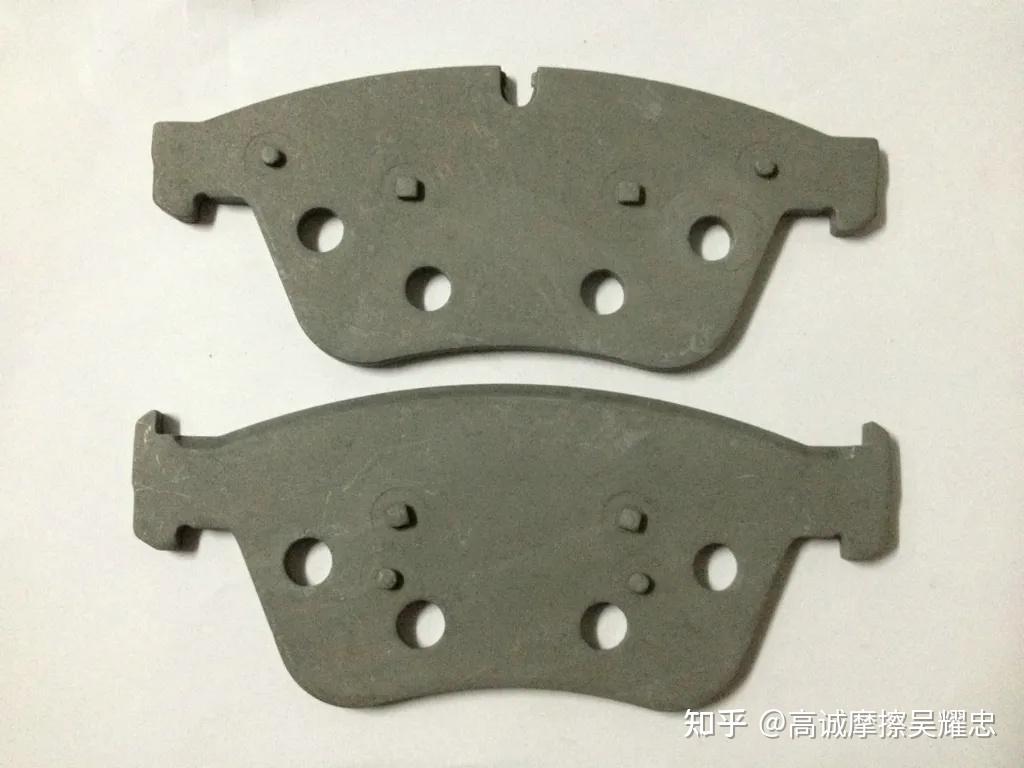
Brake pads, as a core safety component of a car’s braking system, are the “last line of defense” for driving safety. Many car owners are puzzled: why do some brake pads last for 80,000 kilometers, while others only need to be replaced after 30,000 kilometers? In fact, the lifespan of brake pads is not a fixed value, but is affected by a combination of factors, including materials, driving habits, and road conditions. Understanding these key factors not only helps us determine when to replace brake pads, but also allows us to extend their lifespan through proper driving practices, saving on maintenance costs and ensuring driving safety.
I. Core Internal Factor: The material of the brake pads themselves determines their lifespan.
The lifespan of brake pads is primarily determined by their material. Different friction materials exhibit significant differences in wear resistance and high-temperature resistance, directly leading to substantial variations in replacement intervals. Currently, the mainstream brake pads on the market are mainly divided into three categories, each with varying lifespans. Car owners can choose the appropriate type based on their specific driving needs.
Organic brake pads are a lower-cost entry-level option, primarily made of organic materials such as fiberglass and resin. They are softer, produce less noise during braking, and cause less wear on the brake discs, but have poorer wear resistance. These brake pads typically have a lifespan of 20,000-30,000 kilometers, suitable for short-distance urban commuting and gentle driving in family cars. Frequent braking will accelerate wear and potentially shorten their lifespan. However, due to their better environmental performance, they are still some original equipment on some economy vehicles.
Semi-metallic brake pads are the mainstream choice for passenger cars. They incorporate metal fibers into organic materials, balancing wear resistance and braking performance. The addition of metal fibers improves the brake pads’ high-temperature resistance, allowing them to withstand more complex braking scenarios. Front brake pads typically have a lifespan of 30,000-50,000 kilometers, while rear brake pads can reach 60,000-80,000 kilometers. However, these brake pads also have some drawbacks. The higher metal content may cause slight noise during braking, and they cause slightly more wear on the brake discs than organic or ceramic brake pads.
Ceramic brake pads are currently the highest-performing and longest-lasting type of brake pad. Composed of ceramic fibers, a small amount of metal, and binders, they offer advantages such as high temperature resistance, strong wear resistance, low noise, and minimal dust. High-quality ceramic brake pads can last 50,000-60,000 kilometers for the front pads and even over 100,000 kilometers for the rear pads, making them suitable for drivers who frequently drive on highways and mountain roads, or those with aggressive driving habits. However, they are relatively expensive, costing 1.5-2 times more than semi-metallic brake pads. But their exceptionally long lifespan and stable performance make them more cost-effective in the long run.
Besides the friction material, the manufacturing process and quality control of brake pads also affect their lifespan. Original equipment manufacturer (OEM) brake pads rely on strict production standards, with material ratios and thickness control tailored to vehicle designs, resulting in a lifespan that is typically about 30% longer than aftermarket parts. In contrast, some inferior aftermarket parts reduce costs by thinning the brake pads and lowering material standards, potentially resulting in a lifespan that is less than half that of OEM parts. In some cases, substandard materials can even lead to safety hazards such as brake failure.
II. Key External Factors: Driving Habits, the “Invisible Hand” Affecting Lifespan
If the material is the “innate foundation” of brake pad life, then driving habits are the “acquired key” that determines its lifespan. The same set of brake pads can have a lifespan that differs by more than double depending on the driver’s habits. Frequent hard braking and prolonged braking are the main culprits that accelerate brake pad wear.
Frequent hard braking is the most damaging driving behavior to brake pads. When a vehicle brakes, the intense friction between the brake pads and brake discs generates a large amount of heat. Frequent hard braking causes a rapid rise in brake pad temperature, which not only accelerates the wear of the friction materials but may also lead to brake fade, reducing braking performance. Data shows that the habit of frequent hard braking can shorten brake pad life by 30%-50%. Brake pads that were originally designed for 50,000 kilometers may need to be replaced after only 30,000 kilometers. Conversely, smooth driving, anticipating road conditions, and slowing down by releasing the accelerator and gently applying the brakes can significantly reduce the number of times the brake pads rub, effectively extending their lifespan.
Driving with the brakes applied for extended periods is another easily overlooked bad habit. Some drivers lightly apply the brakes while following other vehicles in congested traffic; others habitually keep their brakes applied for extended periods to control speed when going downhill. These behaviors cause the brake pads to remain in a state of friction for a long time, continuously generating heat and accelerating wear. The correct approach is to maintain a safe distance while following other vehicles in congested traffic and avoid frequent light braking; when going downhill, use engine braking to reduce the frequency of brake use.
In addition, vehicle load can indirectly affect brake pad life. Vehicles that are frequently fully loaded or heavily loaded require greater braking force when braking, significantly increasing the pressure on the brake pads and accelerating their wear. For example, SUVs, due to their greater weight than sedans, typically experience faster brake pad wear than comparable sedans; vehicles that frequently tow cargo or are fully loaded with family members may see their brake pad life shortened by approximately 20%.
III. Environment and Road Conditions: External Influences That Cannot Be Ignored
The environment in which brake pads are used and the road conditions also significantly affect their lifespan. Under different road conditions, the friction frequency and stress on brake pads vary, resulting in significant differences in wear rates. This is why the brake pad lifespan of urban commuter cars is usually shorter than that of highway cruising cars.
Urban traffic congestion is a major drain on brake pads. When driving in the city, vehicles frequently start and stop, and follow other vehicles, significantly increasing the number of times the brake pads rub against each other. Especially during rush hour, prolonged low-speed driving and frequent light braking keep the brake pads under high load, causing them to wear out more than twice as fast as on highways. Many urban commuter drivers find their brake pads have a lifespan of only 30,000-40,000 kilometers, or even less.
Mountain roads and long downhill sections cause significant wear and tear on brake pads. When driving on mountain roads, vehicles frequently ascend and descend slopes. Downhill, to control speed, the brake pads need to work continuously. Prolonged friction leads to excessively high temperatures, accelerating wear and potentially causing brake fade, thus affecting braking safety. For vehicles frequently driven on mountain roads, it is recommended to choose ceramic brake pads and shorten the replacement interval to 20,000-30,000 kilometers, while also regularly checking the condition of the brake pads.
High-speed cruising is the most stress-free for brake pads. On highways, vehicles travel at a constant speed, and braking is used very infrequently, leaving brake pads almost idle and significantly reducing wear. Drivers who frequently use highways can typically extend the lifespan of their brake pads to the upper limit of the standard lifespan, or even longer. Some ceramic brake pads, used primarily on highways, can last close to 100,000 kilometers.
In addition, environmental factors can also indirectly affect the lifespan of brake pads. In humid and rainy areas, brake pads are prone to rusting due to moisture. Although slight rusting does not affect use, long-term exposure to moisture will accelerate material aging and shorten lifespan. In high-temperature environments, the friction material of brake pads is prone to softening, which will also aggravate wear. On dusty and gravel roads, sand and gravel may enter between the brake pads and brake discs, causing additional wear and potentially leading to uneven wear of the brake pads.
IV. The Vehicle Itself: The Influence of Vehicle Characteristics and Component Matching
Different vehicle models have different braking system designs and vehicle weights, which affect the wear rate of brake pads. Generally speaking, the greater the vehicle weight and the higher the braking system pressure, the faster the brake pads wear out.
In terms of vehicle type, SUVs and MPVs are much heavier than sedans, requiring their brake pads to withstand greater braking force, resulting in a wear rate that is typically about 20% faster than sedans. High-performance sports cars, in pursuit of ultimate braking performance, use softer friction materials. While this results in excellent braking performance, it also leads to poor wear resistance, with brake pad lifespans typically only 30,000 to 50,000 kilometers. New energy vehicles, equipped with kinetic energy recovery systems, can reduce the frequency of brake pad use through motor-assisted deceleration. Their front brake pad lifespan can be extended to 80,000 to 120,000 kilometers, while the rear brake pad lifespan is similar to that of gasoline vehicles.
Besides the vehicle model, the condition of other components in the braking system also affects brake pad life. Uneven brake disc surfaces or grooves can cause uneven brake pad wear, leading to misaligned wear and shortening their lifespan. A stuck or poorly returning brake caliper will keep the brake pads in a state of constant slight friction with the brake disc, causing continuous wear. Insufficient or deteriorated brake fluid will affect braking performance, forcing the brake pads to withstand greater pressure and accelerating wear. Therefore, regularly checking the overall condition of the braking system is crucial for extending brake pad life.
V. Common Maintenance Mistakes: These Behaviors Are “Consuming” Brake Pad Life
Many car owners, while emphasizing the importance of replacing brake pads, make several misconceptions about routine maintenance, inadvertently shortening their lifespan. Common misconceptions include the following:
One common mistake is blindly pursuing “wear resistance” and choosing unsuitable brake pads. Some car owners believe that the more wear-resistant the brake pads, the better, and blindly choose brake pads with excessively high metal content. However, while these brake pads are wear-resistant, they accelerate the wear of the brake discs, and result in louder braking noise and unstable braking performance, ultimately doing more harm than good. The correct approach is to choose the appropriate type of brake pads based on your car model, driving habits, and road conditions.
Secondly, regular brake pad inspections are often neglected. Many car owners only check their brake pads when they make unusual noises or experience brake failure. By this time, the brake pads are often worn to their limit, which not only affects braking safety but may also damage the brake discs, increasing repair costs. The correct approach is to check the brake pad thickness and wear uniformity during routine maintenance every 5,000 kilometers; vehicles frequently driven on mountain roads or in congested areas should undergo a thorough inspection every 20,000 kilometers.
Third, failing to break in new brake pads. New brake pads have an uneven surface; aggressive driving and frequent hard braking can lead to uneven wear, affecting lifespan and braking performance. The correct approach is to avoid hard braking for the first 200 kilometers after replacing new brake pads, allowing them to fully break in with the brake discs and achieve optimal braking performance.