
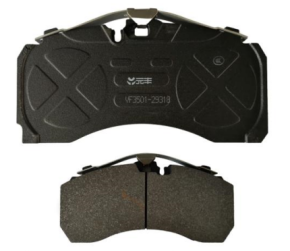
As a core component of the automotive braking system, brake pads directly affect driving safety and the driving experience. Copper, a key component in traditional brake pad formulations, significantly impacts the frictional stability, thermal conductivity, wear resistance, and environmental friendliness of brake pads. Furthermore, with increasingly stringent environmental regulations, brake pad formulations are evolving towards lower copper and copper-free options.
The core role of copper in brake pads stems from its excellent physical properties: high thermal conductivity and good lubricity, a melting point exceeding 1000℃, and excellent ductility. During braking, copper can form a thin film at the friction interface, effectively improving the thermal conductivity and high-temperature resistance of the brake pads and reducing heat fade—a fatal weakness of brake pads under high-temperature conditions. The addition of an appropriate amount of copper helps to quickly disperse the heat generated during braking, maintain a stable coefficient of friction, and ensure that braking performance is not significantly affected during frequent or high-speed braking. Simultaneously, the lubricating effect of copper optimizes the frictional contact between the brake pads and the brake disc, reduces braking noise, minimizes wear on both, and extends the service life of the brake pads.
Higher copper content is not always better; both excessively high and low copper content can lead to performance imbalances in brake pads. When the copper content is too high (usually exceeding 20%), the friction coefficient of the brake pads fluctuates, negatively impacting braking stability, especially in humid environments where the consistency of friction performance significantly decreases. Furthermore, excessive copper content increases brake pad hardness, accelerating brake disc wear, and significantly increasing copper dust generated during braking, posing a potential threat to aquatic life and the ecosystem. Conversely, when the copper content is too low (below 5%) or completely absent, the thermal conductivity of the brake pads decreases significantly. This leads to accelerated heat fade and a rapid decrease in the friction coefficient during high-temperature braking, and brake noise is difficult to control effectively. Adding alternative materials such as potassium titanate whiskers and silicon carbide to simulate the thermal conductivity and lubrication functions of copper is necessary to ensure the basic performance of the brake pads.
With increasing global environmental awareness and tightening policies, copper content restrictions have become a crucial guideline for industry development. North America has enacted regulations requiring brake pad copper content to be reduced to below 0.5% by 2025, while the EU and China are also gradually implementing similar restrictions, promoting the research and application of copper-free brake pads. Currently, the industry has achieved a balance between performance and environmental protection by using alternative material combinations to reduce or even eliminate copper content while maintaining brake pad friction stability, thermal conductivity, and quietness.
In summary, the effect of copper content on brake pad performance exhibits the characteristic of “moderation is optimal.” An appropriate amount of copper can improve the high-temperature resistance, wear resistance, and noise reduction of brake pads, while an imbalance in content will lead to performance shortcomings. Environmental protection policies are driving brake pad formulations to reduce their dependence on copper and achieve synergistic development of safety performance and environmental protection.