
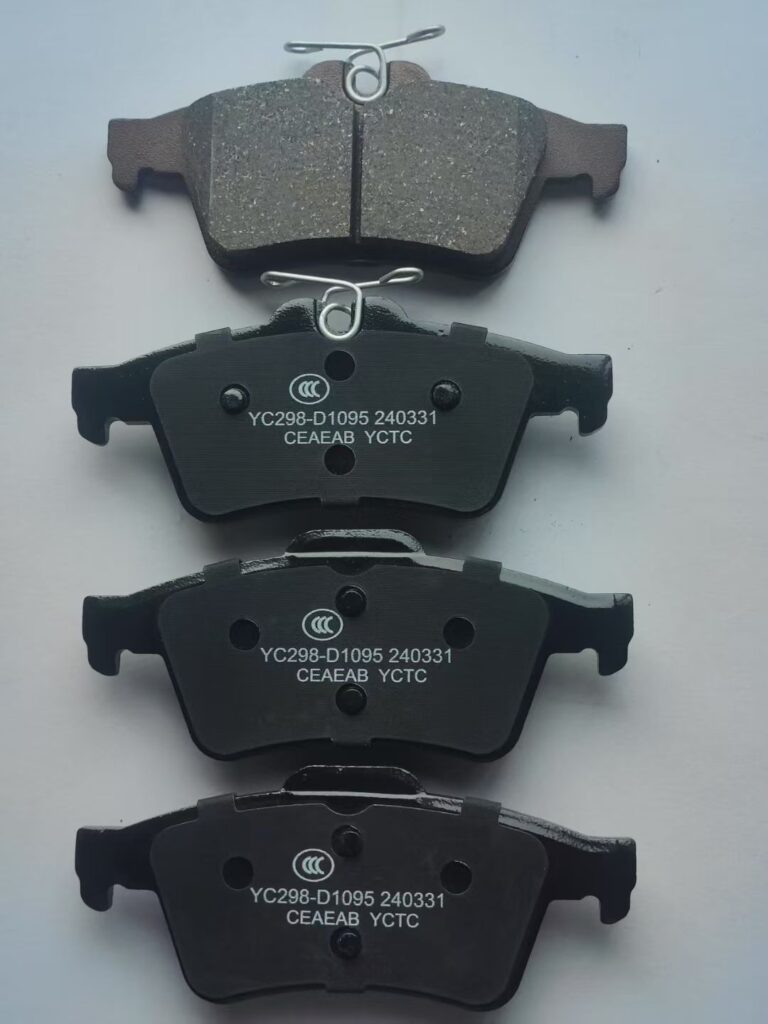
For every car owner, brake pads are the most inconspicuous yet crucial component of the vehicle’s safety system. They must “turn the tide” in emergencies, using strong braking force to shorten braking distance and avoid risks, while also “running smoothly” in daily driving, reducing noise, vibration, and dust, bringing a smooth and quiet driving experience. Braking performance is the foundation of brake pads, while comfort is the core demand of modern car owners. These two seem inherently contradictory: pursuing ultimate braking often sacrifices quietness and smoothness, while prioritizing comfort may compromise safety performance. In fact, with innovations in material technology and upgrades in system matching concepts, brake pads have long been able to achieve a balance between the two. Behind this lies a multi-faceted breakthrough in materials, structure, manufacturing processes, and system synergy.
The Core Contradiction: Why Braking Performance and Comfort Easily “Offend”
To achieve a balance between the two, we must first understand the root of their core contradiction. The braking principle of brake pads is essentially based on “friction generating resistance”: the caliper pushes the brake pads tightly against the brake disc, using the resistance generated by friction to dissipate the vehicle’s kinetic energy, ultimately achieving deceleration or stopping. In this process, the core requirements for braking performance are “strong friction and stable output,” while comfort demands “low vibration, low noise, and low wear.” The contradiction between these two requirements manifests in three aspects:
First, the trade-off between the coefficient of friction. The coefficient of friction is a core indicator of braking performance. A higher coefficient results in stronger braking force and a shorter braking distance, but high friction is often accompanied by severe frictional vibration, easily producing harsh braking noises. It also accelerates wear on the brake pads and discs, leading to increased dust, a harder pedal feel, and a significant decrease in comfort. Conversely, a lower coefficient of friction provides a smoother pedal feel and lower noise, but it slows braking response and increases braking distance, failing to meet the safety requirements of emergency braking.
Second, the balance between material hardness. Harder brake pads can withstand higher temperatures, reducing brake fade and ensuring stable performance during continuous braking, thus improving braking reliability. However, excessively hard materials reduce the fit with the brake disc, leading to high-frequency vibrations during friction, causing abnormal noises. They also accelerate brake disc wear and transmit stronger vibrations to the driver. Softer brake pads offer better fit and less vibration and noise, but they are prone to carbonization and chipping at high temperatures, resulting in significant brake fade, unstable braking performance, and rapid wear, requiring frequent replacement.
Thirdly, there is a lack of system coordination. Many car owners have a misconception that “larger brake pads mean better braking performance,” blindly upgrading to larger brake pads while neglecting the coordination and matching of brake calipers, brake discs, brake fluid, and even tires. In fact, simply increasing the size of brake pads without adjusting other components not only fails to significantly improve braking performance but may also lead to a softer pedal feel, poor heat dissipation, and even increased vibration and noise, thus disrupting the balance between braking performance and comfort.
Material Innovation: A Core Breakthrough Balancing Performance and Comfort
Brake pad performance depends 70% on the formulation of the friction material, and material innovation is key to resolving the inherent contradiction between these two aspects. Traditional single-material brake pads are outdated; today’s mainstream high-performance brake pads use composite formulations. By precisely proportioning different components, they achieve a dual improvement in braking performance and comfort. The most representative example is the application of ceramic composite materials and innovative hybrid formulations.
Ceramic brake pads, as a mainstream choice for mid-to-high-end vehicles, have become a model of balancing performance and comfort thanks to their unique material advantages. Using ceramic fibers and non-metallic minerals as core components, combined with a small amount of metal fibers to optimize thermal conductivity, they retain a high coefficient of friction (typically between 0.40 and 0.45), providing strong and stable braking force. Their high-temperature resistance can reach over 650℃, effectively reducing heat fade and ensuring safety during emergency and continuous braking. Furthermore, the damping properties of ceramic materials significantly reduce frictional vibration, keeping braking noise below 60 decibels, avoiding the harsh noise of traditional metal brake pads. Meanwhile, ceramic materials have extremely low wear rates and a service life of 50,000-100,000 kilometers. Dust emissions are reduced by more than 70% compared to traditional semi-metallic brake pads, keeping wheel rims clean and reducing long-term operating costs, perfectly balancing braking safety, driving comfort, and durability. The Italian SUTI high-performance brake pads used in the Wenjie M9 are a representative of ceramic composite materials made of aramid fiber and copper fiber. They provide strong grip at room temperature and show no significant heat fade at high temperatures. Furthermore, a special noise-reducing coating achieves a quiet and comfortable driving experience.
In addition to ceramic materials, mixed formula materials for different driving scenarios are also continuously being upgraded. For example, Brembo’s Xtra sports brake pads, developed for sporty driving enthusiasts, utilize the innovative BRM X L01 material, inspired by high-performance technology in racing. This material retains the high friction and heat fade resistance required for high performance, maintaining stable frictional performance under high and low temperature cycles to prevent hot spots and vibrations on the brake surface. It also provides the comfort required by high-end vehicles, offering precise pedal feel. Even under demanding driving conditions, it maintains a balance between performance and comfort, allowing speed-loving drivers to enjoy the ride without compromising between braking performance and driving comfort. Gates Freina brake pads, on the other hand, use high-quality raw materials such as imported DuPont steel wheel fiber from the US and imported potassium carbonate from Japan. Through scientific formulation, they achieve multiple advantages including stable friction coefficient, strong grip, and quiet vibration reduction, making them suitable for various driving scenarios such as rain, snow, and mountain roads.
It’s worth noting that the optimized material formulation is not about blindly piling on high-end materials, but rather a precise match based on vehicle type, weight, and power performance. For example, everyday passenger vehicles prioritize comfort and durability, often using low-dust, quiet ceramic or low-metal formulations (metal content less than 30%). High-performance sports cars and track vehicles prioritize extreme braking, and can use carbon fiber or carbon-ceramic composite materials (withstanding temperatures up to 800℃ and improving braking efficiency by 50%). Commercial vehicles and ride-hailing vehicles, which brake frequently, require high-temperature resistant and wear-resistant semi-metallic materials (metal content 30%-65%) to achieve the optimal balance between braking performance and comfort in different scenarios.
Structural Optimization: Enhancing Dual Experience Through Detailed Design
If materials are the core, then structural design is the key to realizing both braking performance and comfort. High-quality brake pads not only require good materials but also a scientific structural design. By optimizing the friction surface, shock absorption structure, and heat dissipation performance, the contradiction between the two can be further resolved, improving the overall experience.
The detailed design of the friction surface directly affects the smoothness and stability of braking. Traditional brake pads often have a flat friction surface design, resulting in poor fit and heat dissipation, easily leading to localized overheating, vibration, and abnormal noise. Modern high-performance brake pads commonly employ grooved and chamfered designs: the surface heat dissipation grooves quickly dissipate heat and dust generated during braking, preventing heat fade caused by heat buildup, while reducing the contact area between the friction surface and the brake disc, lowering vibration frequency, and reducing abnormal noise; the precisely calculated chamfer design avoids rigid collisions between the brake pad edges and the brake disc, further optimizing braking smoothness, making the brake pedal feel more linear, avoiding the discomfort of a soft initial press and abrupt mid-to-high speed, achieving a comfortable braking experience of “responsive light press and powerful heavy press.” For example, the “Top-Scratching Easy-Wear” brake pads, through a special chamfered and heat dissipation groove layout, optimize heat distribution and drainage performance, not only improving high-temperature braking stability but also quickly restoring braking performance after wading, balancing safety and comfort.
The addition of shock-absorbing and noise-dampening structures is an important detail for improving comfort. Many high-end brake pads incorporate elastic sound-absorbing pads and damping layers on the back. The sound-absorbing pads effectively absorb vibration energy generated during braking, suppressing noise at its source. The damping layer cushions the rigid connection between the brake pad and caliper, reducing vibration transmission and providing a smoother pedal feel for the driver, avoiding harsh vibration feedback. This structural design doesn’t sacrifice the coefficient of friction; by absorbing vibration and noise alone, it significantly improves driving comfort without affecting braking performance, making it particularly suitable for noise-sensitive mid-to-high-end vehicles.
Furthermore, the size and thickness of the brake pads must be matched in conjunction with the brake disc and caliper. Larger brake pads are not necessarily better. As measured data shows, for the same family car, simply increasing the brake pad area from 180cm² to 240cm² only shortens the braking distance by 0.3 meters, which is negligible. In fact, it may increase unsprung mass, affect heat dissipation, leading to significant heat fade during continuous braking and increased vibration and noise. Scientific design involves determining the area and thickness of the brake pads based on the caliper’s piston thrust, the size of the brake disc, and its heat dissipation performance. This ensures a perfect fit between the brake pads and the brake disc, allowing for even transmission of braking force. This guarantees fast braking response while avoiding vibrations and noises caused by localized friction, achieving a synergistic improvement in both braking performance and comfort.
System Coordination: The Key Closed Loop for a Dual Experience
As a core component of the braking system, the performance of brake pads depends on the coordinated operation of the entire system, and is even closely related to tire grip. Many car owners blindly modify their brake pads, neglecting the matching of calipers, brake discs, brake fluid, and tires. This ultimately leads to “modifying brake pads alone, but with compromised results,” failing to achieve a balance between braking performance and comfort. In fact, braking is a system engineering project; only when all components work together can a perfect closed loop be formed.
The matching of brake pads with brake discs and calipers is fundamental. The friction coefficient and hardness of brake pads must match the material and heat dissipation performance of the brake discs. For example, ceramic brake pads require ventilated disc brakes. The internal ventilation channels quickly dissipate heat generated during braking, preventing brake pad fade due to high temperatures, reducing overheating wear between the brake pads and discs, extending service life, and further improving braking stability and comfort. The ventilated disc brakes standard on the Wenjie M9 work perfectly with ceramic composite brake pads, combined with electronic parking brake and brake assist systems, ensuring stability during emergency braking without compromising daily driving comfort. The piston thrust of the brake caliper must match the area and friction coefficient of the brake pads. Simply replacing the brake pads with larger ones without upgrading the calipers results in insufficient thrust from the original calipers, preventing the larger brake pads from fully contacting the brake disc – essentially “using a sledgehammer to crack a nut.” This not only fails to improve braking performance but may also lead to a soft pedal feel, uneven braking, and reduced comfort.
The choice of brake fluid also indirectly affects braking performance and comfort. As the medium for transmitting braking force, the boiling point and fluidity of brake fluid directly affect braking response speed and stability. Original factory brake fluid has a lower boiling point, making it prone to boiling during prolonged braking, which can lead to brake failure and a soft pedal feel. High-performance brake fluid (such as DOT4 or DOT5.1) has a higher boiling point and better fluidity, allowing for faster transmission of braking force and more sensitive braking response. It also avoids brake fade and abnormal pedal feel caused by brake fluid boiling, improving both braking safety and providing a more linear and comfortable braking feel.
The most easily overlooked factor is the impact of tire grip on both. The ultimate goal of braking is to stop the vehicle, and the final step in this process is the friction between the tires and the road surface. Even if the brake pads can clamp the brake discs, if the tires cannot grip the ground, the vehicle will still slide. This not only fails to shorten the braking distance but may also cause vibration and loss of control due to sliding, compromising both braking safety and driving comfort. Real-world testing data shows that for every 0.1 increase in the tire friction coefficient, the braking distance at 100 km/h can be shortened by 2-3 meters, a more significant effect than simply increasing the size of the brake pads. Therefore, to balance braking performance and comfort, it’s essential not only to choose high-quality brake pads but also to pair them with tires offering moderate grip. This ensures stable tire contact with the road surface during braking, preventing slippage and vibration, and allowing the brake pads to fully exert their braking force.
Installation and Maintenance: Maintaining Balanced Performance
High-quality brake pads, a scientifically designed structure, and system matching are all necessary, but proper installation and regular maintenance are also crucial to maintaining a long-term balance between braking performance and comfort, preventing performance degradation due to improper installation or lack of maintenance.
Proper installation is fundamental. When installing brake pads, ensure the brake disc surface is clean, free of oil, rust, and debris. Otherwise, it will affect the fit between the brake pads and the brake disc, leading to uneven braking and abnormal noise. Simultaneously, ensure the correct installation of the damping pads and shock-absorbing layers to prevent misalignment that could cause damping failure. After installation, allow approximately 300 kilometers for a break-in period, avoiding sudden braking, to allow the brake pads and brake discs to gradually reach optimal contact, ensuring smooth braking feel and controllable noise. Many car owners experience problems like abnormal noises and soft braking even with high-quality brake pads due to improper installation, wasting the advantages of the materials and design.
Regular maintenance is key to extending lifespan and maintaining performance balance. In daily driving, brake pad thickness should be checked regularly. When the thickness is less than 3mm, they should be replaced promptly to prevent reduced braking performance and accelerated brake disc wear caused by excessively thin brake pads. At the same time, regularly clean dust and debris from the brake disc surface and check the condition of the brake caliper pistons to prevent caliper jamming, which can lead to uneven brake pad stress, vibration, and abnormal noise. Furthermore, brake fluid should be changed regularly according to driving scenarios to prevent aging brake fluid from affecting braking response and ensuring the stability of the braking system. For vehicles frequently driven on mountain roads and subject to frequent braking, the brake pad inspection and replacement cycle should be shortened to promptly identify potential heat fade issues. In cold northern regions, when using ceramic brake pads, attention should be paid to their low-temperature braking performance; using specialized brake fluid can help prevent slow braking response at low temperatures.