
The "last line of defense" for road safety
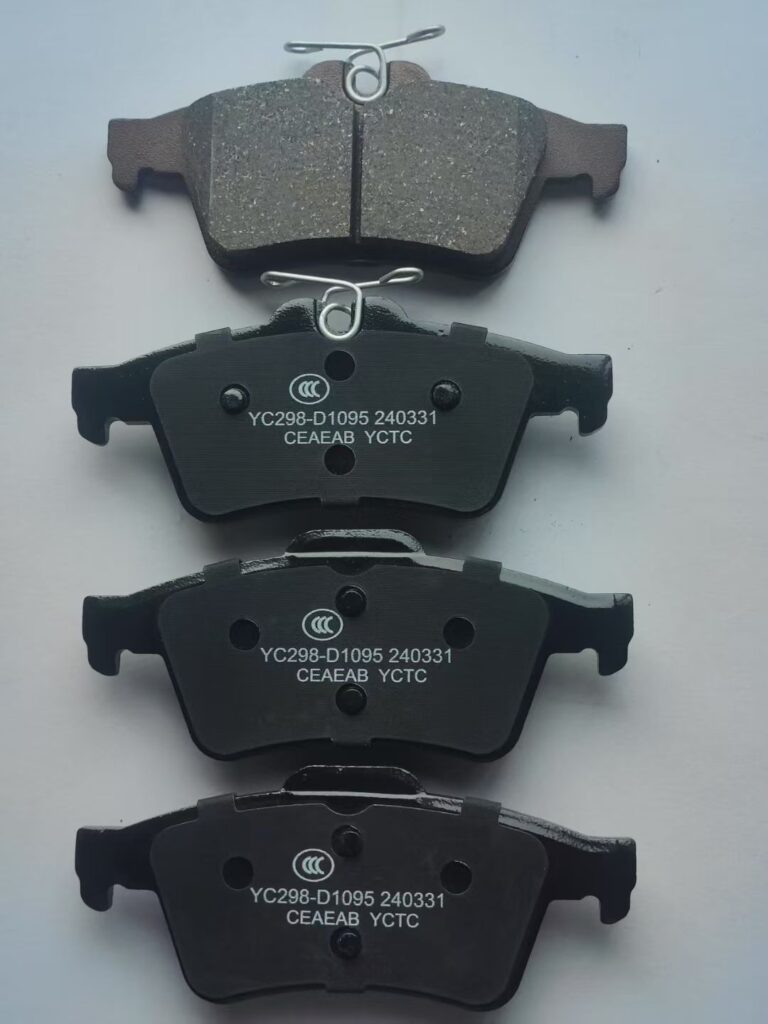
Among the many components of a car, brake pads may seem inconspicuous, but they bear the core mission of protecting the lives of drivers and passengers. They are the core actuator of the braking system, converting the vehicle’s kinetic energy into heat energy through friction to achieve deceleration or stopping. Once brake pads malfunction, even the most advanced safety features cannot prevent the risk of brake failure. Today, we will comprehensively explain the essential knowledge about brake pads, covering their construction principles, material selection, replacement timing, and purchasing tips.
I. Disassembling Brake Pads: Seemingly Simple, But with Hidden Secrets
A qualified brake pad is not made of a single material, but is precisely assembled from three parts: a steel plate, an adhesive heat insulation layer, and friction blocks. Each part performs its specific function to ensure braking performance. The steel plate, as the base material, undergoes professional coating for rust prevention. During the coating process, a furnace temperature tracker monitors the temperature distribution to ensure a uniform and firm rust-proof layer, preventing corrosion that could affect performance over long-term use. The heat insulation layer, made of non-heat-conducting material, is crucial for isolating the high temperatures generated by friction, preventing heat transfer to the brake calipers and brake fluid, and avoiding hydraulic system failure. The friction blocks are the core of the braking system, composed of friction materials and an adhesive. During braking, they are pressed against the brake disc by the caliper piston, generating braking force through friction. They also wear down gradually due to friction, and their quality directly determines braking performance and lifespan.
From a working principle perspective, braking is essentially an energy conversion process. When the brake pedal is pressed, the pedal force is amplified through a lever mechanism and a vacuum power assist device, pushing the master cylinder to generate hydraulic pressure. This pressure is then transmitted through the brake lines to each wheel cylinder, where it is further amplified according to Pascal’s principle, ultimately pushing the pistons to compress the brake pads against the brake discs. During this process, the vehicle’s kinetic energy is converted into heat energy and dissipated, thus achieving deceleration. The ABS anti-lock braking system, on the other hand, uses high-frequency adjustment of hydraulic pressure to prevent tire lock-up, maintaining braking force near its limit and ensuring steering tracking ability during braking. However, it’s important to note that ABS only optimizes braking performance and cannot increase the friction limit between the tires and the road surface.
II. Material Comparison: Choosing the Right Material for Different Scenarios is Key
The performance differences of brake pads are mainly due to the material of the friction material. Currently, there are five main types of materials, each suitable for different car models and driving scenarios. Blindly choosing one will only affect the braking effect or shorten its service life.
Ceramic brake pads are the preferred choice for family cars, thanks to their stable coefficient of friction, low noise, minimal dust, and slow wear, making them an ideal option for most car owners. Their lifespan is 30% longer than ordinary materials, they produce no noticeable noise during braking, and the wheels are less prone to dust accumulation, maintaining their aesthetic appeal. The price is typically between 200-400 yuan per set (front wheels), balancing safety and economy.
Semi-metallic brake pads are made of a mixture of organic materials and metal fibers. They have a high coefficient of friction and fast heat dissipation, making them suitable for vehicles that frequently drive at high speeds or brake frequently. However, they are prone to producing abnormal noises and generate relatively more dust during operation. They are also cheaper, costing about 150-300 yuan per set, making them a cost-effective option suitable for car owners with limited budgets.
Metal brake pads, made primarily of metals such as iron and steel, offer excellent wear resistance and heat dissipation, making them suitable for high-performance vehicles or complex road conditions. However, they are noisy and cause significant wear on the brake discs, so they are rarely used in everyday family cars. Organic brake pads are quieter, cause less wear on the brake discs, and are more affordable, making them suitable for low-speed commuting in urban areas. However, they have a lower coefficient of friction, and their performance degrades significantly at high temperatures, making them unsuitable for aggressive driving.
Carbon ceramic brake pads are exclusive to high-performance cars, boasting top-notch braking performance, high-temperature resistance, and wear resistance. They are also lightweight, improving fuel economy, but their high price far exceeds the needs of ordinary family cars, making them unnecessary for non-performance-oriented vehicles. In contrast, NAO friction materials (asbestos-free organic materials) are free of asbestos and steel fibers, making them environmentally friendly and offering stable friction performance. They are suitable for disc brakes, but are relatively expensive, making them suitable for car owners who demand both environmental friendliness and performance.
III. Timing for Replacement: Three Key Signals – Don’t Wait Until You’ve Grinded to the Bone to Pay Attention
Brake pads are consumables and need to be replaced promptly. Excessive wear not only reduces braking performance but can also damage the brake discs, significantly increasing repair costs. If the following three signs appear, be sure to check and replace them immediately.
First, there’s the abnormal noise warning. A harsh “squeak” or “squeak” metallic friction sound when braking indicates that the wear warning pads inside the brake pads are alerting you. When the friction material wears down to 3-5mm, the warning pad will contact the brake disc, producing abnormal noise. If it’s not replaced at this point, it will quickly wear down the brake disc, doubling the repair costs. Note that if a “dull” or “thumping” sound occurs, it may indicate improper installation or a deformed brake disc, which also requires immediate inspection.
Secondly, a decrease in braking performance, such as a longer pedal travel, a softer feel when braking, or a significantly increased braking distance with the same force, is most likely due to excessive wear of the friction material, resulting in ineffective pressure transmission and reduced braking efficiency. This situation is extremely dangerous at high speeds and requires immediate replacement.
Finally, you can judge based on thickness and mileage. New brake pads typically have a friction material thickness of 10-12mm. They must be replaced when they wear down to 3mm (about half the thickness of a coin), and require close monitoring when they wear down to 1/3. In terms of mileage, the lifespan of brake pads for passenger cars is approximately 20,000-30,000 kilometers. For vehicles that frequently brake in urban commuting, the lifespan may be shortened to 15,000-20,000 kilometers, while for vehicles that mostly drive on highways, it can be extended to 30,000-40,000 kilometers, but the maximum should not exceed 40,000 kilometers. Beyond this period, even if the thickness is sufficient, the friction material will age and harden, resulting in a significant decrease in performance.
IV. Selection and Avoiding Pitfalls: Two Key Parameters + Three Tips to Choose the Right Product and Avoid Mistakes
When choosing brake pads, the key is to match them with your vehicle model and needs. Avoid blindly pursuing specifications or being greedy for cheap prices. The following tips can help you avoid inferior products.
First, focus on two core parameters: First, the model and specifications. The brake pads must perfectly match the original vehicle’s brake caliper type and disc size. When purchasing, provide the vehicle’s year, engine displacement, and drive type, or refer to the original brake pad model to ensure the length, width, thickness, and metal backing plate hole positions of the brake pads are consistent with the original to avoid loosening and abnormal noise. Do not buy “universal” models; these products are often thinned to fit the original size, reducing the friction area and significantly decreasing braking performance. Second, the coefficient of friction must match the vehicle’s weight. For passenger cars (1.2-1.8 tons), choose 0.35-0.45 FF or GG grade, balancing braking power and wear resistance; for SUVs/MPVs (1.8-2.5 tons), choose 0.40-0.50 HH grade to meet greater braking force requirements. Do not blindly pursue racing-grade high-friction coefficient products, as these can easily lead to overheating and excessive wear of the brake discs. Conversely, a low coefficient of friction will result in weak braking; neither should be chosen.
Here are three key tips to avoid common pitfalls: First, check the appearance. High-quality brake pads have the friction material firmly bonded to the backing plate, without bubbles or cracks. The backing plate is free of rust and burrs, and the surface has standardized heat dissipation grooves. Inferior products are often hand-attached, resulting in materials that easily detach, a rough appearance, and uneven coloring. Second, check the packaging. Legitimate products have clearly printed packaging, indicating the license number, coefficient of friction, implementation standard, production batch number, etc., and include a certificate of conformity and anti-counterfeiting labels. Inferior products have flimsy packaging, unclear key information, and no after-sales guarantee. Third, smell the odor. High-quality brake pads have only a harmless, slight material odor. Inferior products are made from recycled materials and will release a pungent, burnt smell when heated, and may even release harmful gases with long-term use. Furthermore, prioritize well-known brands such as Bosch, Brembo, and Ferodo. These products undergo rigorous testing and offer 1-2 year warranties, ensuring greater safety.
V. Common Problems and Maintenance: Avoid These Misconceptions
In daily use, brake pads are prone to various problems, most of which stem from improper maintenance or misconceptions. Timely avoidance of these issues can extend their service life and ensure braking safety. Uneven wear is a common problem, often caused by poor return of the brake caliper or insufficient lubrication of the guide pin, rather than a quality issue with the brake pads. If the root cause is not addressed, the problem will recur even after replacement. Regular lubrication of the guide pin and inspection of the brake caliper are necessary.
Brake shuddering is often caused by brake disc deformation. Frequent hard braking causes the brake discs to overheat and then cool rapidly, which can easily lead to deformation. This not only affects comfort but also accelerates the aging of the braking system, requiring timely correction or replacement of the brake discs. Overheating is a hidden killer on long, high-speed downhill slopes. Frequent braking causes the brake pads to overheat, drastically reducing the coefficient of friction and even leading to brake failure. It is recommended to use engine braking on long downhill slopes and avoid continuous braking.
In terms of maintenance, brake fluid needs to be changed regularly. For ordinary passenger cars, it should be changed at least once a year, while racing cars need to be changed after each race. Once opened, it must be sealed and stored to prevent moisture absorption and a lower boiling point, and different types of brake fluid should not be mixed. Furthermore, owners of new energy vehicles should note that while the regenerative braking system can reduce brake pad wear, it cannot replace regular inspections. Each maintenance check should include assessing the thickness, surface defects, and the unobstructed flow of the cooling grooves to prevent performance degradation at high temperatures.
Brake pads are the foundation of driving safety and cannot be taken lightly. Choosing the right material, replacing them promptly, and maintaining them properly are essential to ensure precise and reliable braking every time. At your next maintenance appointment, don’t just focus on the engine oil; remember to have the mechanic check the condition of the brake pads—this small action may protect you and your family’s safety more effectively than any high-tech safety feature.