
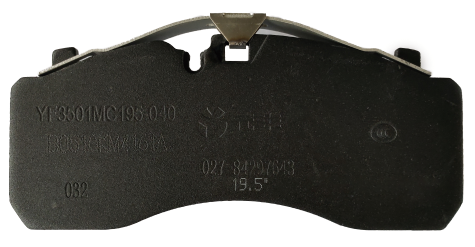
As the core component of the automobile braking system, brake pads are directly related to driving safety, and their material selection not only affects braking performance, but is also closely related to human health and ecological environment. In recent years, regulations have been gradually introduced around the world to explicitly prohibit the use of asbestos, chromium and other harmful substances in brake pads, which is not a technical restriction, but a health protection based on scientific cognition, an industry upgrade based on environmental protection concepts, and a reverence for life and nature. In-depth exploration of the reasons behind the ban can not only understand the logic of industry development, but also clarify the deep meaning behind each environmental protection regulation.
Asbestos: the “lethal convenience” that has been eliminated, the lurking threat of invisible carcinogens
Asbestos was once a widely used material in the brake pad manufacturing industry, with its excellent high temperature resistance, wear resistance and low cost, from the 20s to the 80s of the 20th century, it once became the “first choice” for brake pad friction materials – it can maintain stability in the high temperature of more than 300 °C generated during braking, effectively improve the brake friction performance, and the mineral deposits are rich, the mining and processing cost is extremely low, and it is suitable for the industrial production needs at that time. But behind this “convenience” is its irreversible fatal harm to human health, and it is also the core root cause of its complete ban.
The harm of asbestos stems from its own fiber properties. Asbestos is a fibrous silicate mineral, its fiber diameter is only 1-3 microns, much smaller than human hair, imperceptible to the naked eye, once scattered during production, use or disposal, it will float in the air, and it is very easy to be inhaled by the human body. After these fine needle-like fibers enter the human body, they cannot be metabolized and excreted, and will be deposited in the lungs, pleura and other organs for a long time, causing a series of serious diseases: long-term inhalation will lead to pulmonary interstitial fibrosis, which will gradually harden the lung tissue and lose its respiratory function, which is commonly known as “asbestosis”; What’s even more dangerous is that asbestos has been listed as a class I carcinogen by the World Health Organization (WHO) and the International Agency for Research on Cancer (IARC), and long-term exposure will increase the risk of lung cancer and pleural mesothelioma by 10-20 times, and the incubation period of this disease is as long as 15-30 years.
The asbestos in the brake pads will continue to wear out during the daily driving braking process, releasing a large number of asbestos fibers, which will not only harm auto repair workers, brake pad production workers and other occupational groups – they have been exposed to asbestos-containing brake pads in an unprotected environment for a long time, and the dose of inhaled fibers far exceeds the safe range, which is a high incidence of asbestos-related diseases; It will also spread into the air, pollute the surrounding environment, and be inhaled by passing pedestrians and residents, forming a wide range of public health hazards. What is even more vigilant is that even if asbestos-containing brake pads are no longer used, if they are not properly disposed of after disposal, asbestos fibers will still exist in the soil and air for a long time, continuing to cause pollution.
In fact, as early as 2011, our country clearly required the elimination of friction plates containing asbestos-containing materials for motor vehicle brakes through the “Industrial Structure Adjustment Guidance Catalogue”, and the national standard GB 12676-1999 and GB 5763-2008 also clearly stipulated that “brake linings should not contain asbestos”. There have been spot checks showing that the failure rate of brake pads imported from Guangdong is as high as 91%, of which 10 batches contain asbestos prohibited ingredients, involving well-known brands such as Toyota and German Textar, highlighting the urgency of banning asbestos and the necessity of supervision.
Chromium and other metallic substances: not only pollution, but also multiple hazards superimposed invisible killers
In addition to asbestos, chromium (especially hexavalent chromium) and other metal substances are also prohibited from being used in the production of brake pads, and their harm is mainly concentrated in human health and ecological environment, and pollution is persistent and cumulative, and the scope of harm far exceeds asbestos.
The use of chromium in brake pads is mainly to improve friction performance and rust resistance, among which hexavalent chromium is the most prominent. Hexavalent chromium is also classified as a class 1 carcinogen, with strong oxidation and high toxicity, and its toxicity is more than 100 times that of trivalent chromium. Unlike asbestos, hexavalent chromium will not only harm the human body through respiratory inhalation, but also cause harm through skin contact, digestive tract ingestion and other ways: skin contact can cause redness, ulcers, dermatitis, and even skin cancer; Inhalation of hexavalent chromium dust will irritate the respiratory tract, damage the nose, throat and lungs, and long-term inhalation will significantly increase the risk of lung cancer and digestive tract cancer. Ingestion of water or food containing hexavalent chromium can damage the liver, kidneys and nervous system, cause anemia, convulsions, and in severe cases, lead to organ failure.
For the ecological environment, the pollution of chromium and other metal substances is even more difficult to reverse. Chromium in the brake pads will enter the soil and water in the form of dust with brake wear, chromium is chemically stable in the environment, not easy to be degraded by microorganisms, and will accumulate in soil and groundwater for a long time, forming persistent pollution. Excessive hexavalent chromium (more than 10ppm) can cause fatal damage to aquatic life, and polluted groundwater and soil will affect crop growth, enriching through the food chain, and eventually endangering human health again – for example, long-term drinking of drinking water with excessive chromium will lead to urinary chromium accumulation, damage kidney function, and increase the risk of cancer.
In addition to chromium, other heavy metals such as lead and cadmium are also prohibited from being used in brake pads, which will also be released through brake wear, polluting the air, soil and water, and long-term exposure can lead to various diseases such as nervous system damage, metabolic disorders, and bone lesions. The EU REACH regulation clearly stipulates that the lead content in brake pads must be controlled within 0.1%, and hexavalent chromium must be completely banned; our country is also implementing the “China ROHS” plan in line with EU directives to strictly control the heavy metal content in brake pads and align with international environmental standards.
It should be noted that not all chromium elements are banned, the toxicity of trivalent chromium is much lower than that of hexavalent chromium, and it is one of the essential trace elements of the human body, but because it is difficult to completely control the valence state of chromium in the production process, and the pollution risk of hexavalent chromium is extremely high, the use of various chromium-containing compounds in the production of brake pads is generally prohibited in the industry to eliminate harm from the source.
The inevitability of banning: the dual promotion of the concept of health priority and the technological upgrading of the industry
The prohibition of asbestos, chromium and other substances in brake pads is not a simple policy restriction, but a reflection of the concept of health priority, and it is also the inevitable result of the technological upgrading of the auto parts industry. With the development of science and technology, more and more environmentally friendly, safe and excellent alternative materials have emerged, which has completely solved the concern that “banning harmful materials will affect braking performance” and providing solid technical support for banning measures.
At present, the mainstream brake pad replacement materials on the market are mainly divided into three categories: ceramic-based friction materials, semi-metallic friction materials and organic friction materials (NAO formulations). Ceramic-based materials are reinforced by nanoscale ceramic fibers, with high-temperature curing process, not only completely eliminate the harm of asbestos, chromium and other harmful substances, but also have the advantages of high temperature resistance, wear resistance, stable braking, low noise, etc., the braking efficiency far exceeds the traditional asbestos-containing brake pads, is one of the most environmentally friendly and high-quality alternative materials, which can reduce VOC emissions by more than 95% and reduce the content of heavy metals to trace levels; Semi-metallic friction materials are reinforced by metal fibers, with organic binders, do not contain asbestos and hexavalent chromium, have stable friction performance, and are suitable for most passenger cars and commercial vehicles. Organic friction materials are mainly composed of resin and fiber, which have no heavy metal pollution and low braking noise, making them suitable for urban commuter vehicles.
From the perspective of industry development, the ban on harmful substances such as asbestos and chromium is also an important part of the transformation of the global automobile industry to “green environmental protection”. Nowadays, countries around the world are strengthening the environmental protection control of motor vehicles, in addition to limiting exhaust emissions, but also gradually paying attention to the environmental protection performance of auto parts – brake pads are easy to wear and highly polluting parts, and the improvement of their environmental protection standards is a key part of the automobile industry to achieve environmental protection throughout the life cycle. The European Union, the United States, Japan and other developed countries have completely banned the import and sale of brake pads containing asbestos and hexavalent chromium, and our country is also constantly strengthening supervision to promote the transformation of the brake pad industry to green, safe and high-quality, which not only protects public health, but also helps to achieve the “double carbon” goal, and at the same time enhances the international competitiveness of our country’s auto parts (to avoid export products being returned due to the presence of prohibited substances).